Lock, unlock, impulse, drop: the lever escapement, step by step
Nearly every mechanical watch made today ticks through the same small cycle, many times a second. Here is what happens in each step, and why watchmakers care about a few hundredths of a millimetre.
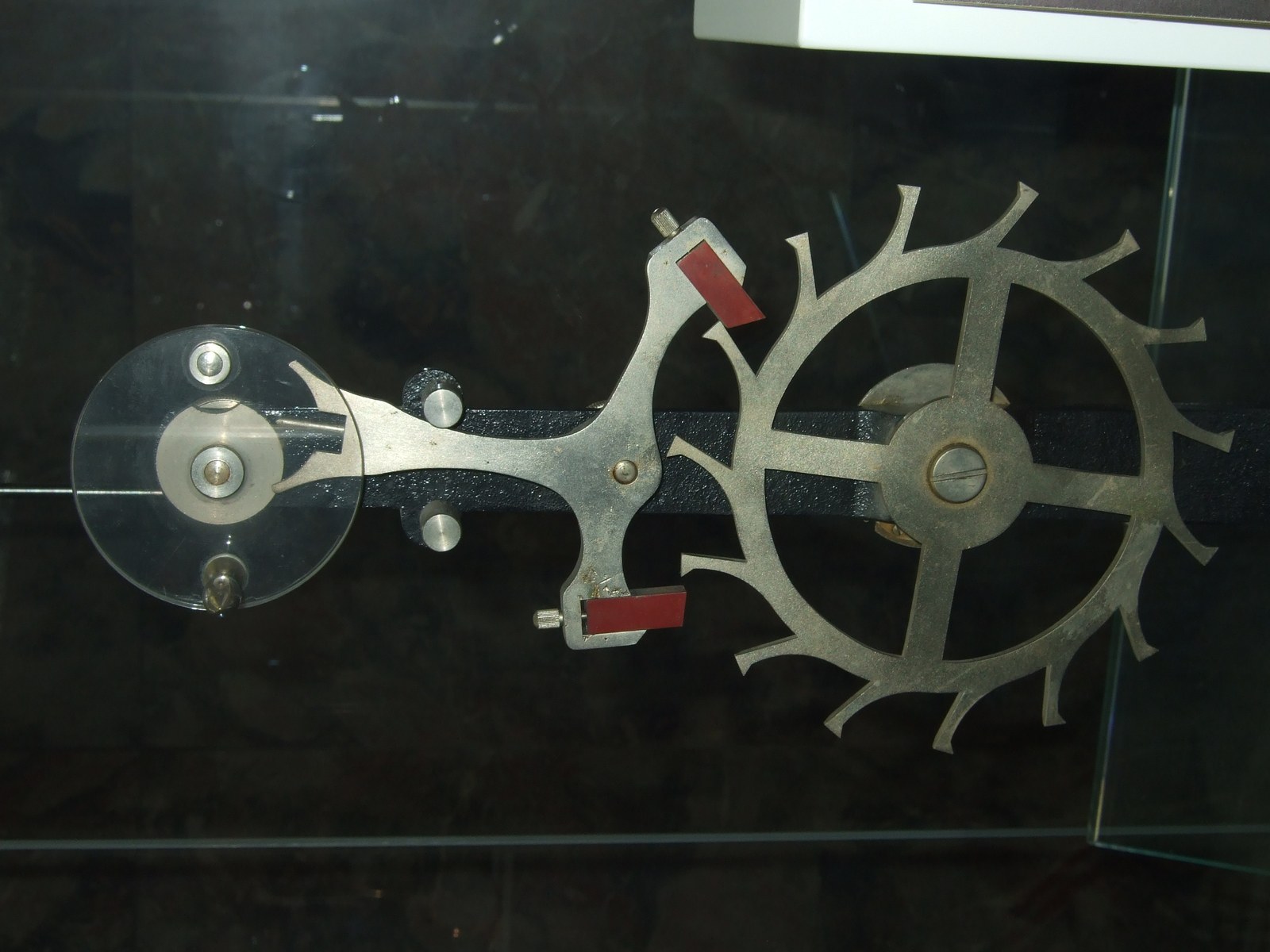
Open the back of almost any mechanical watch and look for the part that is twitching. That is the escapement. Its job is to let the energy of the mainspring out in tiny, equal portions, and to give the balance a small push each time so it keeps swinging. In a modern watch beating at 28,800 vibrations an hour, it does that eight times a second, every second, for years.
Almost all of these watches use the same design: the lever escapement. It was invented in England by Thomas Mudge around 1754, improved by several makers (Breguet among them), and given its familiar form in the early 1800s. Since about 1900 nearly every portable mechanical timekeeper has used one.
The three parts
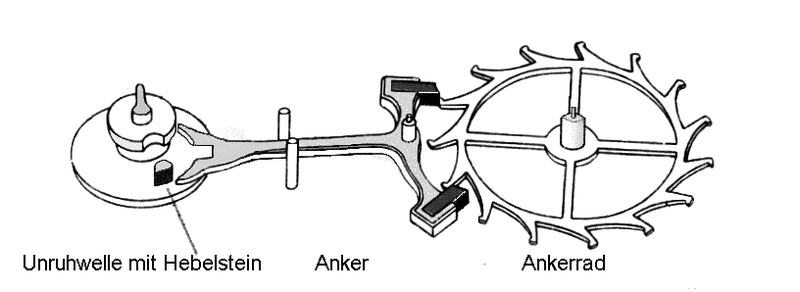
There are only three moving pieces to keep track of.
- The escape wheel. The last wheel of the gear train, always pushed forward by the mainspring. In a Swiss lever it usually has 15 teeth with a club-shaped tip.
- The pallet lever (also called the pallet fork). A small T-shaped piece that rocks on a pivot. One end carries two jewels, the entry and exit pallet stones, which work against the escape wheel. The other end is a fork.
- The balance, with its hairspring. On its staff sits a small disc, the roller, carrying a single upright jewel called the impulse pin or roller jewel. This pin is what drops into the fork.
The balance swings one way, the pin flicks the fork across, the lever releases the wheel for one step, the wheel pushes the lever and the lever pushes the balance. Then it all happens again in the opposite direction.
Step 1: lock
Start with the balance swinging freely. One escape wheel tooth is resting on the locking face of one pallet stone. The wheel wants to turn, but it cannot. The lever is held against a fixed stop, the banking pin, and does nothing.
This is the quiet part of the cycle, and the most important one. For most of its swing, the balance is not touching the escapement at all. It is "detached", free to move under the control of its hairspring alone. That freedom is the main reason the lever keeps such good time.
Step 2: unlock
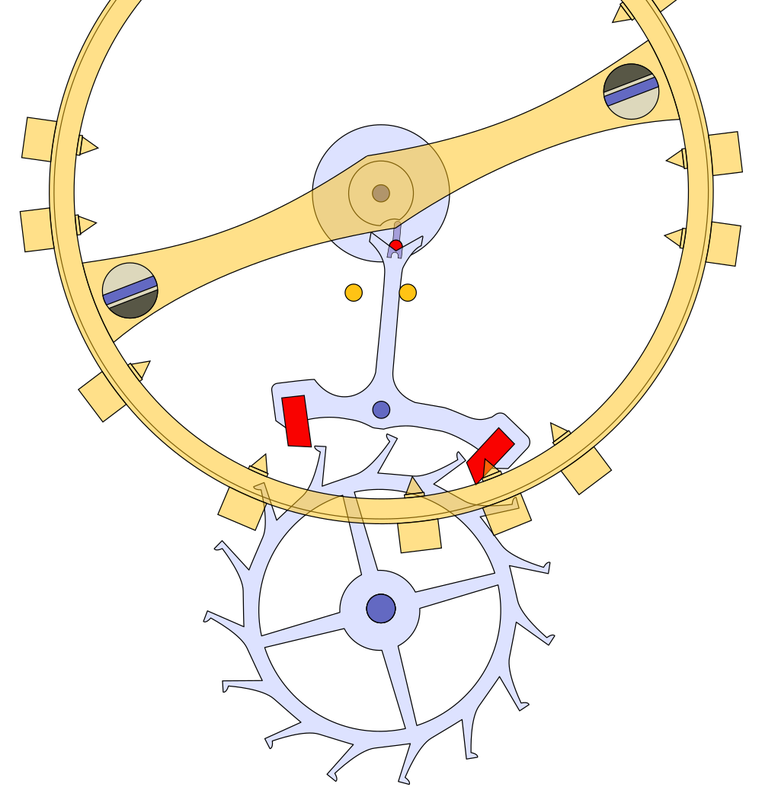
The balance swings back towards the centre. Its impulse pin enters the slot in the fork and pushes the lever over. That moves the pallet stone, and the tooth starts to slide off the locking face.
Unlocking is the one moment when the balance has to do work for the escapement rather than the other way round. It costs a little energy, so watchmakers want the lock as shallow as safety allows. Too deep, and the balance wastes energy on every beat. Too shallow, and a knock could release the wheel by accident.
Step 3: impulse
Once the tooth slips past the edge of the locking face, the escape wheel is free to push. The tip of the tooth slides along the slanted impulse face of the pallet stone, and with a club tooth, the tooth's own slanted heel shares the work. That forces the lever further over. The fork, still holding the impulse pin, gives the balance a push in the direction it was already going.
This is the only moment in the cycle when the balance gains energy. Everything else is about keeping that push regular: the same size, at the same point of the swing, every time.
Step 4: drop
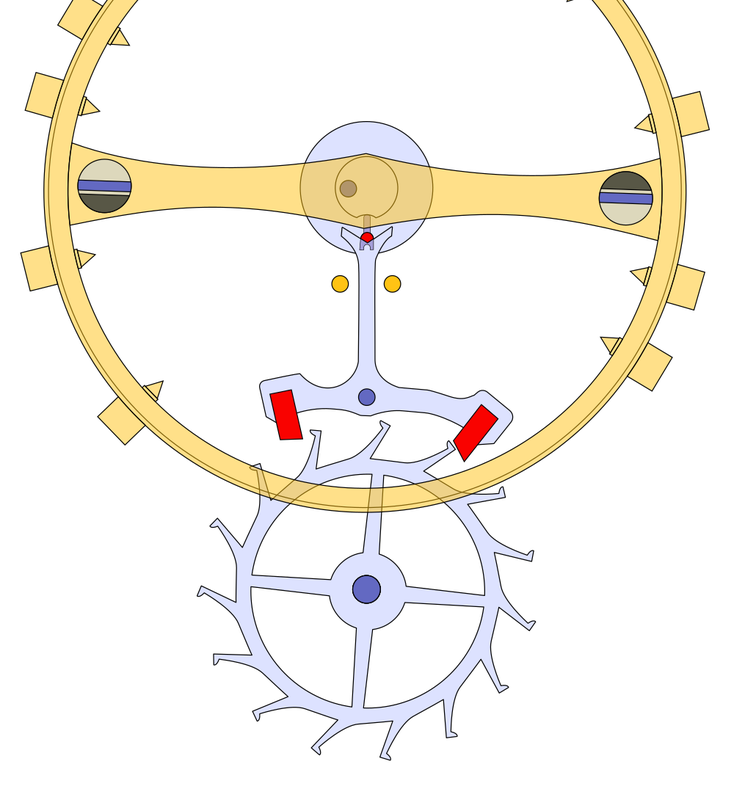
The tooth leaves the pallet stone, and for a moment the escape wheel turns with nothing holding it back. It jumps forward a small distance until the next tooth lands on the locking face of the other pallet stone. That free movement is called the drop, and it is the click you hear. The two drops, one per side, make up the familiar tick and tock.
Drop is pure loss: the wheel moves but does no useful work. It cannot be zero, because the parts need a little clearance to work at all, but a well-made escapement keeps it small and the same on both sides. When the two sides differ, the watch's beats are uneven. A timegrapher shows this as beat error.
Step 5: draw, and back to lock
Here is the clever bit. The locking faces of the pallet stones are not set square to the escape wheel teeth. They are angled so that the pressure of the tooth pulls the pallet deeper into the wheel. That pull is called draw. Its job is to pull the lever firmly against its banking pin and hold it there while the balance swings free.
Without draw, a jolt to the wrist could nudge the lever across while the impulse pin was away from the fork. The pin would then come back and find the fork on the wrong side, and the watch could stop. Draw, together with a small safety pin or dart on the lever that guards against exactly that, keeps the lever where it should be until the balance comes back for it.
The balance runs out to the end of its swing, the hairspring turns it around, and the whole sequence runs again from the other side: unlock, impulse, drop, lock, draw.
Why it won
Earlier escapements, like the verge or the cylinder, kept the balance in contact with the escapement for most of its swing, so friction and changes in the mainspring's force went straight into the timekeeping. The lever touches the balance only briefly, near the middle of its swing, where a push disturbs its timing least. It also starts by itself: give the watch a shake and it runs. And it can be mass-produced and adjusted with ordinary tools. That mix of accuracy, toughness and practicality is why it saw off nearly every rival.
From the bench
When a watchmaker "checks the escapement", these are the things being checked: lock depth on both stones, equal drop on both sides, enough draw to snap the lever back to the banking, and enough clearance for the guard pin. Each is a matter of hundredths of a millimetre, adjusted mostly by moving the pallet stones in or out of their slots. Get them right, and the rest of the watch has a chance.
Gallery
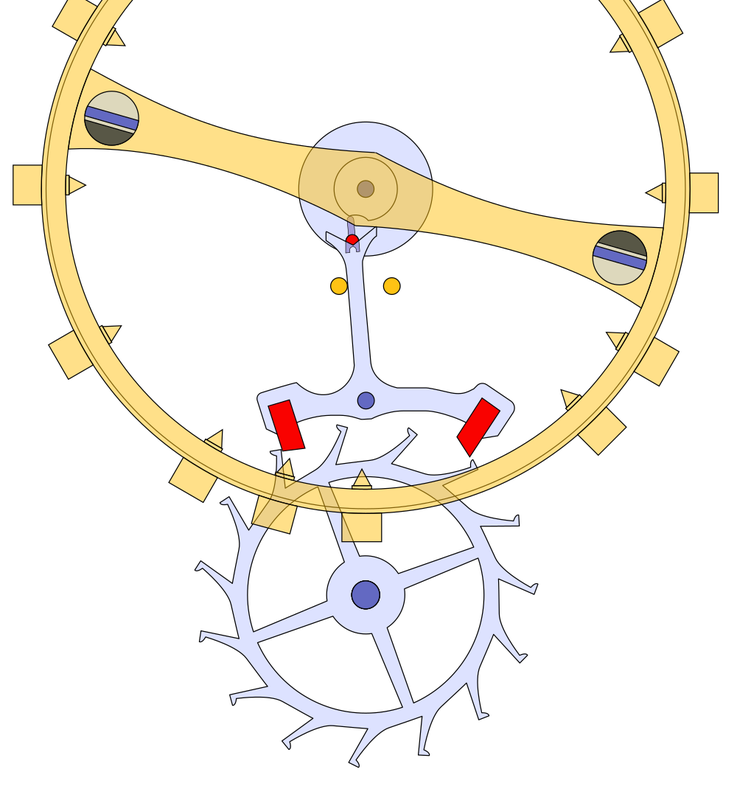
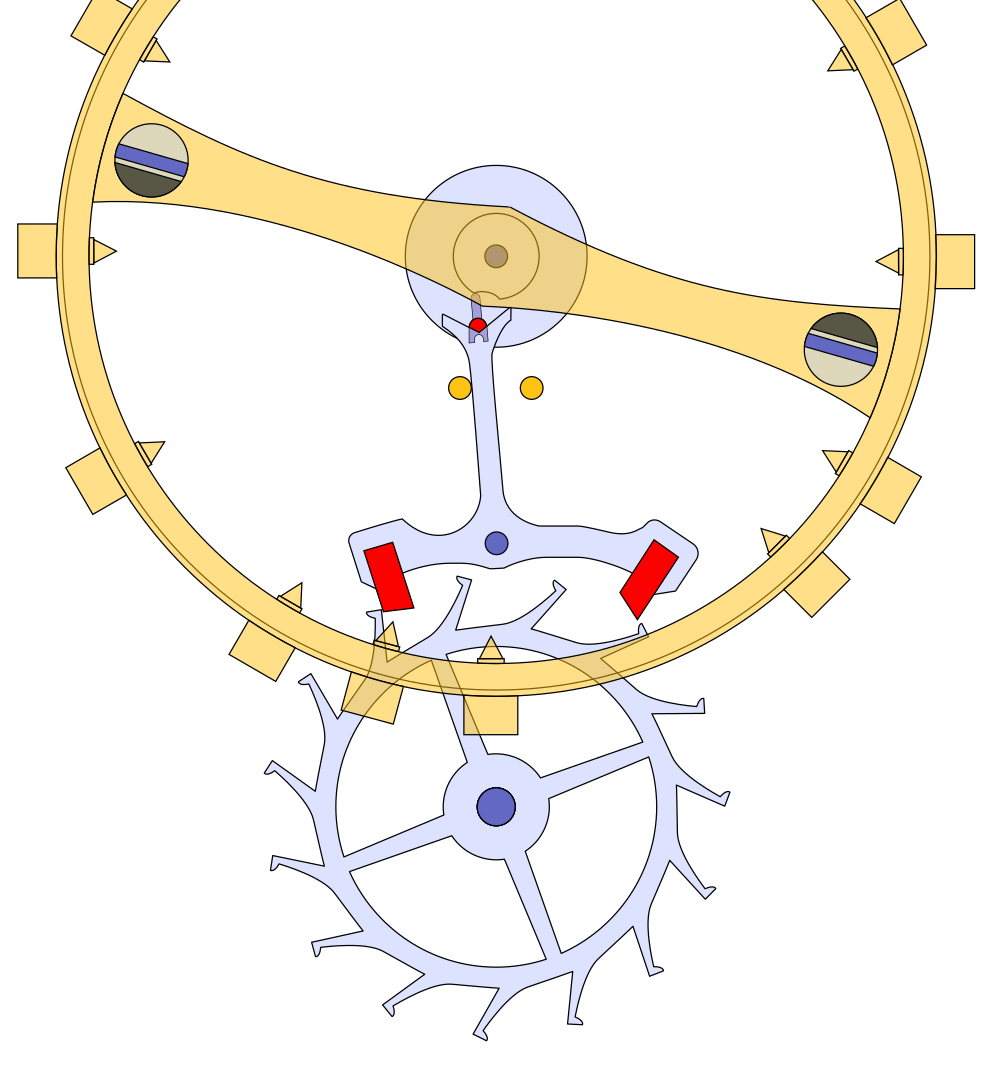
Phase 1: locked. A tooth rests on the locking face of one pallet stone while the balance swings freely. Diagram: Fred the Oyster · CC BY-SA 4.0 · Wikimedia Commons

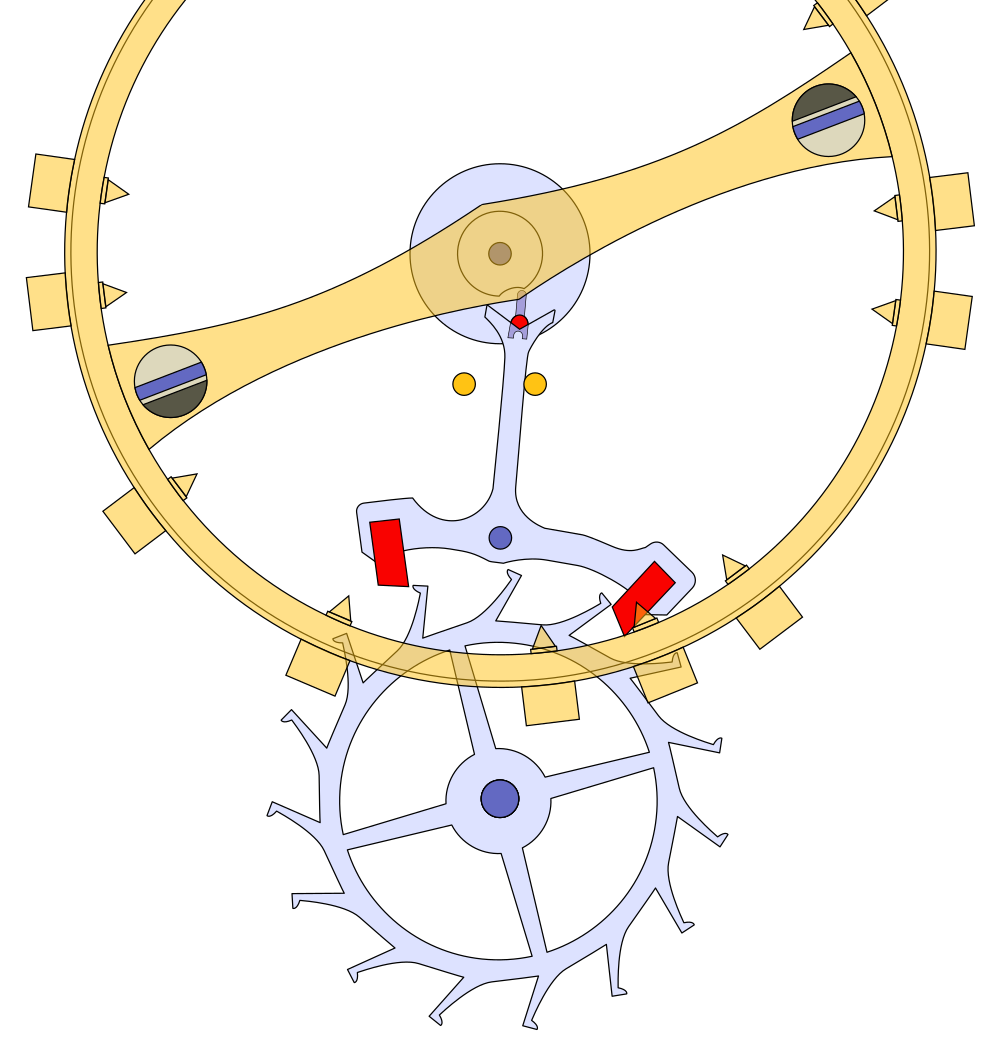
Phase 2: unlocking and impulse. The roller jewel swings the lever over, the tooth slips off the locking face and pushes along the impulse face. Diagram: Fred the Oyster · CC BY-SA 4.0 · Wikimedia Commons

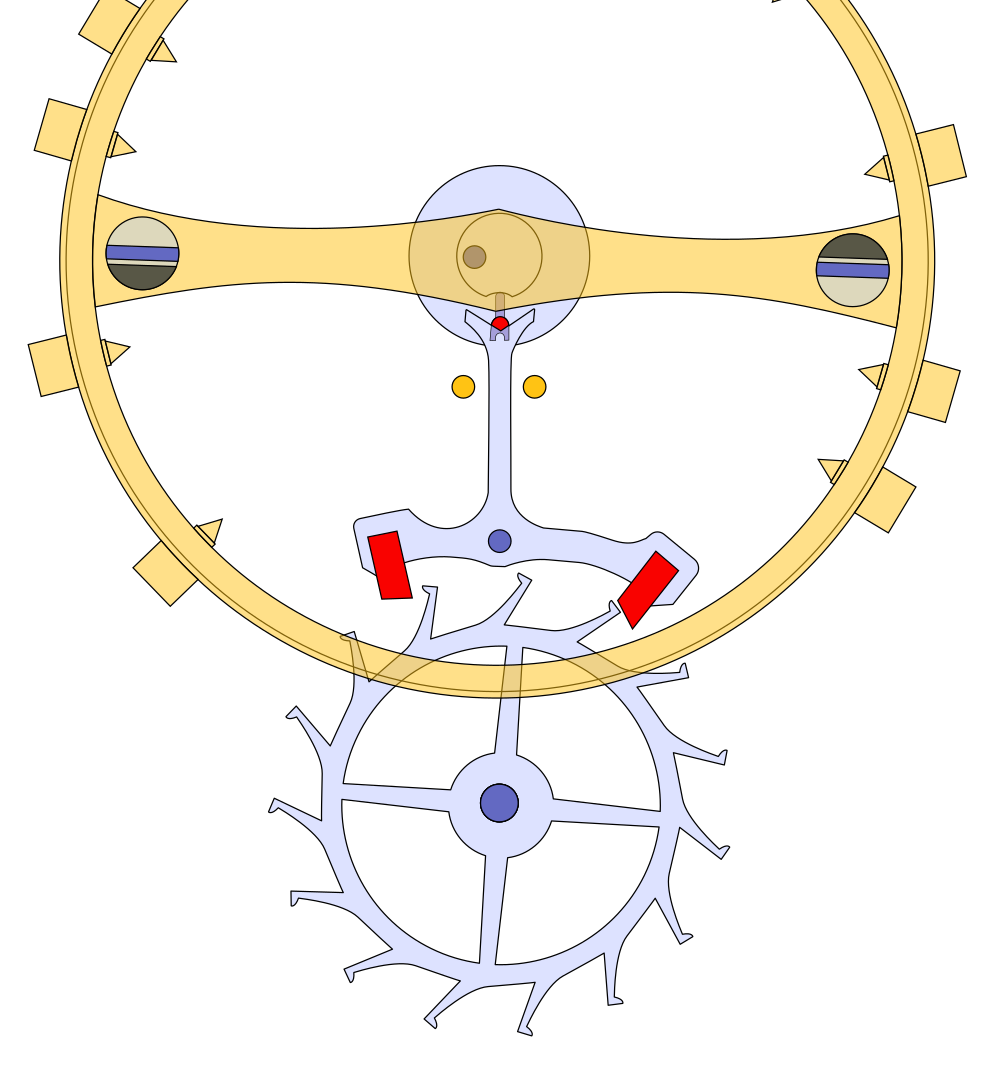
Phase 3: drop and lock. The wheel jumps forward and the next tooth lands on the other pallet. Draw pulls the lever against its stop. Diagram: Fred the Oyster · CC BY-SA 4.0 · Wikimedia Commons

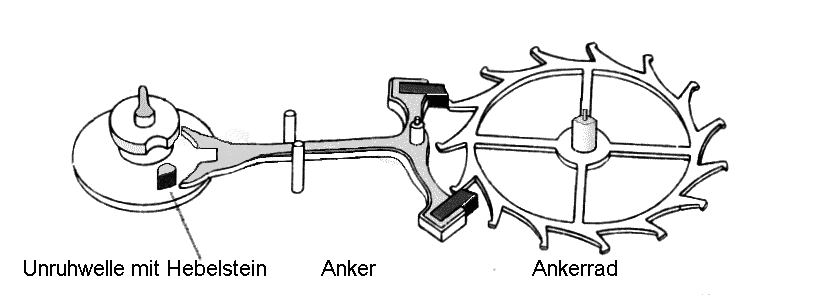
The Swiss lever escapement as drawn in Claudius Saunier's nineteenth-century treatise. Engraving: Claudius Saunier · Public domain · Wikimedia Commons

Sources
- Moritz Grossmann, A Practical and Theoretical Treatise on the Detached Lever Escapement for Watches and Time Pieces (1884), archive.org
- Claudius Saunier, Treatise on Modern Horology in Theory and Practice, archive.org
- F. J. Britten, The Watch & Clockmakers' Handbook (1881), archive.org
- Wikipedia: Lever escapement