Year IX, 7 Messidor: what Breguet actually patented in 1801
The tourbillon is now a luxury showpiece. In 1801 it was a practical fix for a real problem in pocket watches, and Breguet's patent says exactly what he thought it would do.
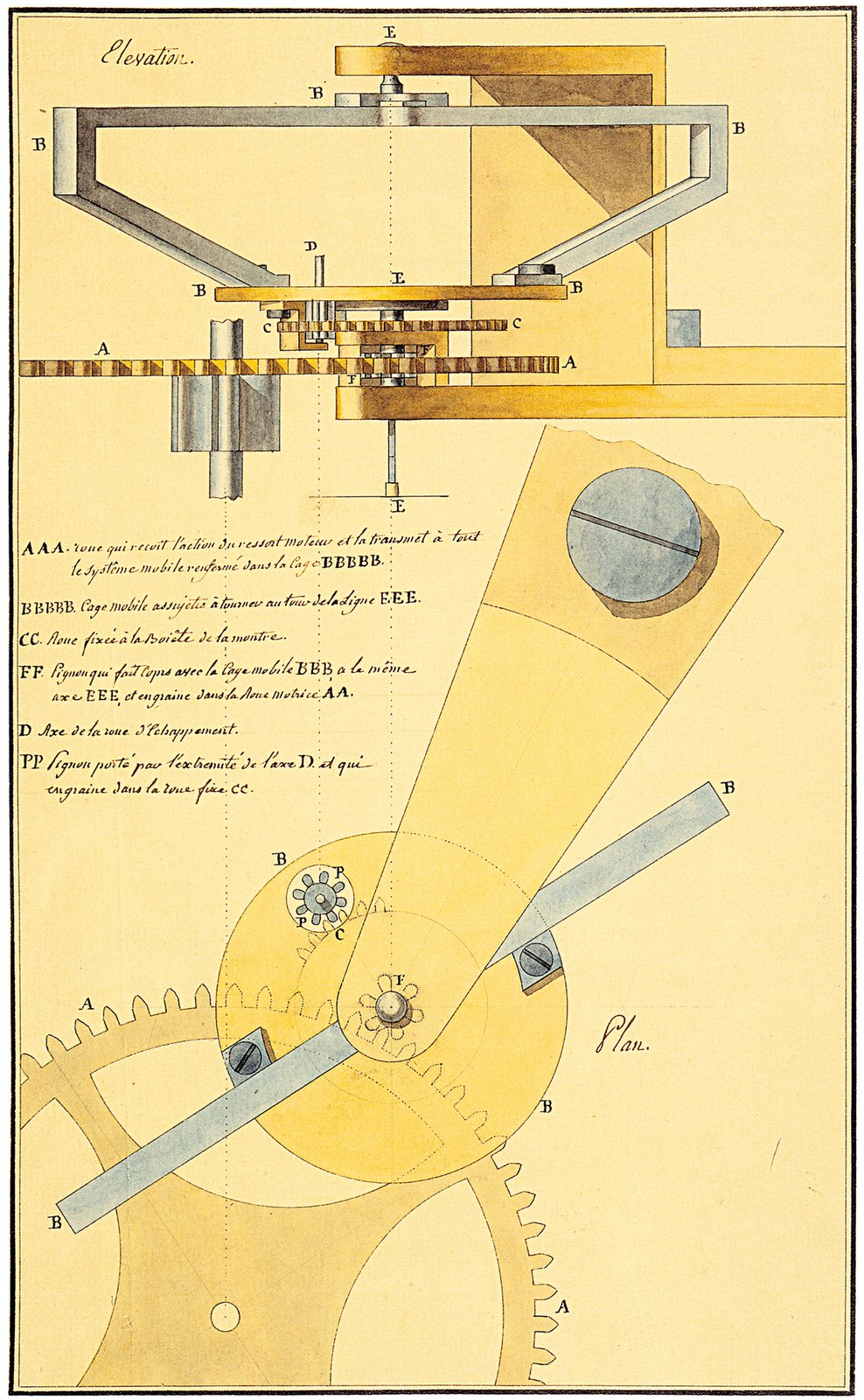
On 26 June 1801 the French Republic granted Abraham-Louis Breguet a ten-year patent for what he called a "tourbillon regulator". France was still using the revolutionary calendar, so the paperwork is dated 7 Messidor, Year IX. Two and a quarter centuries later the word "tourbillon" sells some of the most expensive wristwatches in the world. It helps to go back to the patent and see what problem Breguet was really trying to solve.
The man
Breguet was born in Neuchâtel in 1747. His father died when he was ten, and his stepfather came from a family of watchmakers with a showroom in Paris. At 15 he was sent to an apprenticeship near Versailles, and he took evening classes in mathematics in Paris. By the 1780s he had his own workshop on the Quai de l'Horloge and a clientele that included the French court.
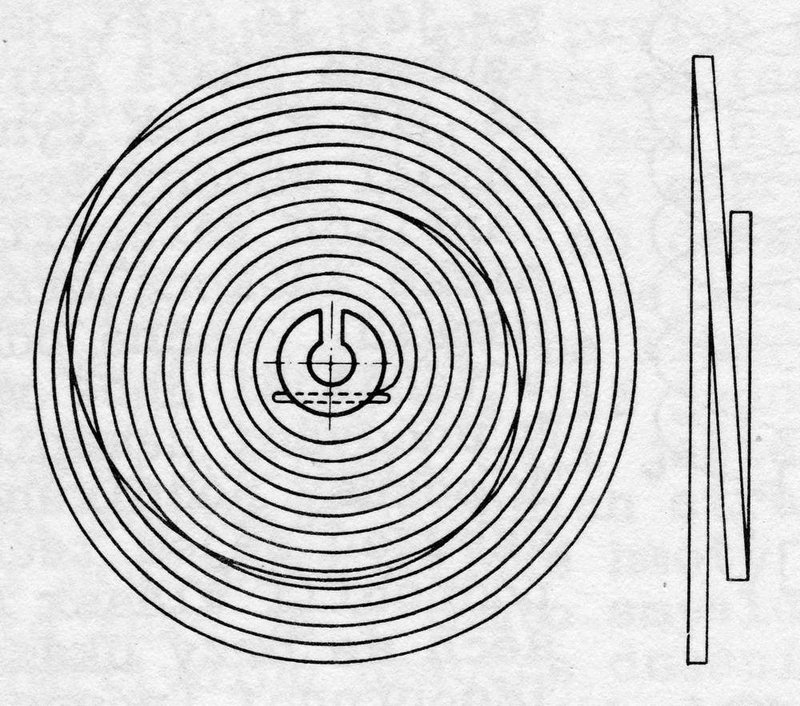
He was not just a fine maker. He was a working inventor. The self-winding "perpétuelle", the pare-chute shock protection for the balance pivots, and the raised overcoil hairspring that still carries his name all came out of his workshop. He was also a close friend of the London chronometer maker John Arnold, and the two families were close: Arnold's son, John Roger, spent time in Breguet's Paris workshop.
The problem: a watch that hangs
In 1800 a good watch lived in a waistcoat pocket, and it spent most of the day upright, crown up. That matters, because the balance wheel at the heart of a watch is never perfectly balanced. If one side is a hair heavier, gravity pulls on it as it swings. With the watch lying flat that has little effect. With the watch vertical, the heavy spot speeds up or slows down each swing, depending on where it sits. On top of that, the hairspring sags slightly under its own weight. Watchmakers call these position errors, and in a pocket watch they were stubborn.
You can fight them by poising the balance more and more carefully, and good makers did. Breguet's idea was different. Instead of trying to remove the errors, average them out.
The idea: put the escapement in a cage
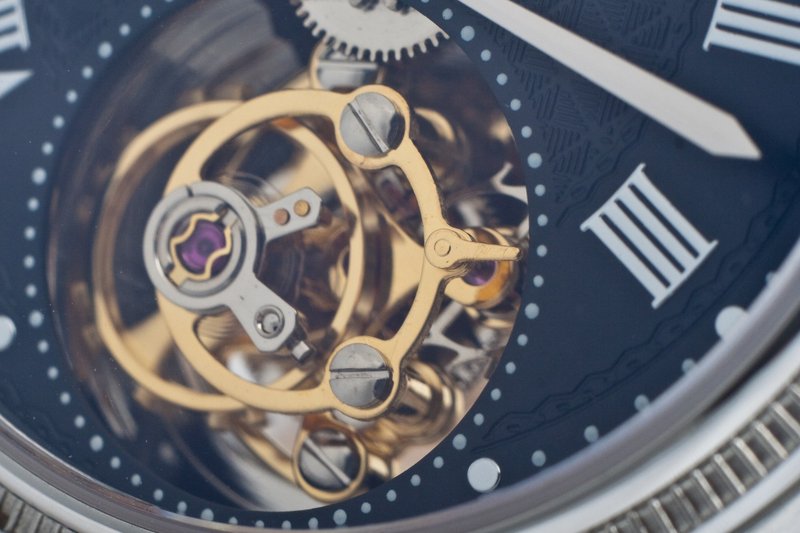
In a tourbillon the balance, hairspring, pallet lever and escape wheel are all mounted in a light cage, called the carriage. The carriage itself turns, usually once a minute. The fourth wheel of the train, which would normally drive the escape wheel directly, is fixed in place. The escape pinion, carried around by the cage, rolls around this fixed wheel. As the cage turns, the escapement keeps working inside it, and the drive to turn the cage and to keep the balance going comes through the same path.
The effect is that the heavy spot on the balance, and the sag in the hairspring, no longer stay in one place relative to gravity. Over each turn of the cage they point every way in turn, and the fast and slow errors largely cancel out. The watch still has errors, but they are averaged over a minute instead of piling up.
Breguet's own words to the Minister of the Interior, quoted by his company's historians, were that the invention cancelled the anomalies caused by the different positions of the regulator. The 1806 national exhibition in Paris described it as a mechanism that kept a watch equally accurate whatever its vertical or tilted position. Neither source talks about beauty or spectacle. This was meant to be a practical fix for watches carried upright.
From patent to product
The paperwork took time. Breguet submitted his full technical file, with a hand-coloured plate (the drawing at the top of this page), on 24 December 1800. The patent came through six months later, signed off by the interior minister Jean-Antoine Chaptal.
Making the thing work took longer. A tourbillon carriage has to be very light, because the escapement has to start and stop all that extra mass many times a second. Breguet built experimental pieces first, and the first tourbillon watch was not sold until 1805. According to the company's records, only 35 were sold before his death in 1823. They went to collectors, a bishop, the Spanish Bourbons and the future George IV of England.
A tribute in the British Museum
The most moving early tourbillon is in London. Around 1774 John Arnold made a pocket chronometer, his No. 11. Arnold died in 1799, and the watch seems to have come to Paris with his son, John Roger Arnold. Between 1808 and 1809 Breguet's workshop rebuilt it around a tourbillon, using a different detent escapement, and in August 1809 Breguet gave it to John Roger.
The British Museum holds the piece today. An inscribed plate on the movement calls it Breguet's first tourbillon regulator combined with one of Arnold's first works, offered to his son as a homage to Arnold's memory. The museum's records show that 14 craftsmen were paid for the conversion, a reminder that even in 1808 a tourbillon was a team effort.
Does it still matter?
For a pocket watch that spends its life upright, the tourbillon has a real job to do. A wristwatch moves through every position during the day, which does some of the same averaging by itself, and modern balances and hairsprings are far better made. That is why watchmakers have argued for decades about how much a wristwatch tourbillon actually improves timekeeping. Fewer than a thousand tourbillons are thought to have been made between 1801 and 1945, most of them by specialists, often for observatory trials, where the best did very well.
Today the tourbillon is mostly about craft: a cage weighing well under a gram turning once a minute in plain sight. That is a fair thing to celebrate, as long as we remember where it started: a practical man, a real problem, and a patent that said exactly what he hoped his cage would do.
From the bench
Anyone who has serviced a tourbillon learns Breguet's main lesson the hard way: weight is the enemy. Every extra milligram in the cage costs amplitude, and amplitude is what keeps a balance steady. The best carriages, then and now, are a lesson in removing metal without losing rigidity.
Gallery
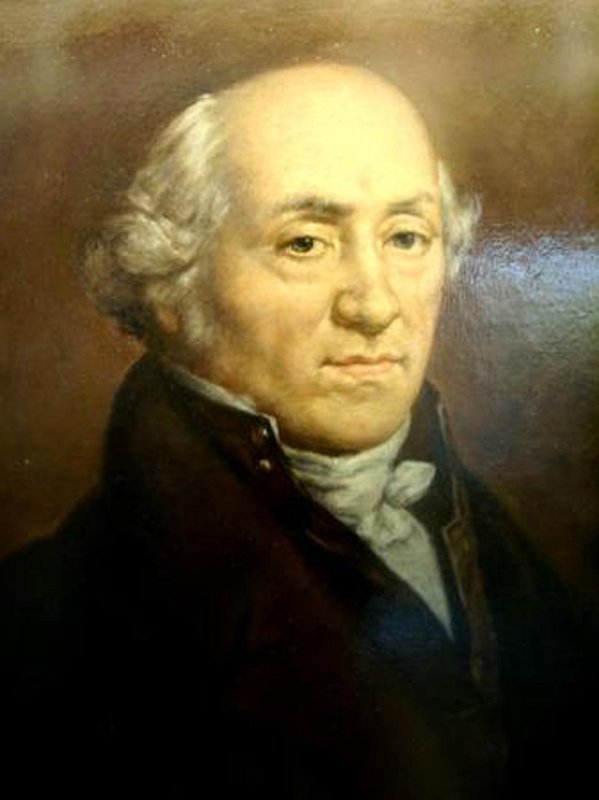
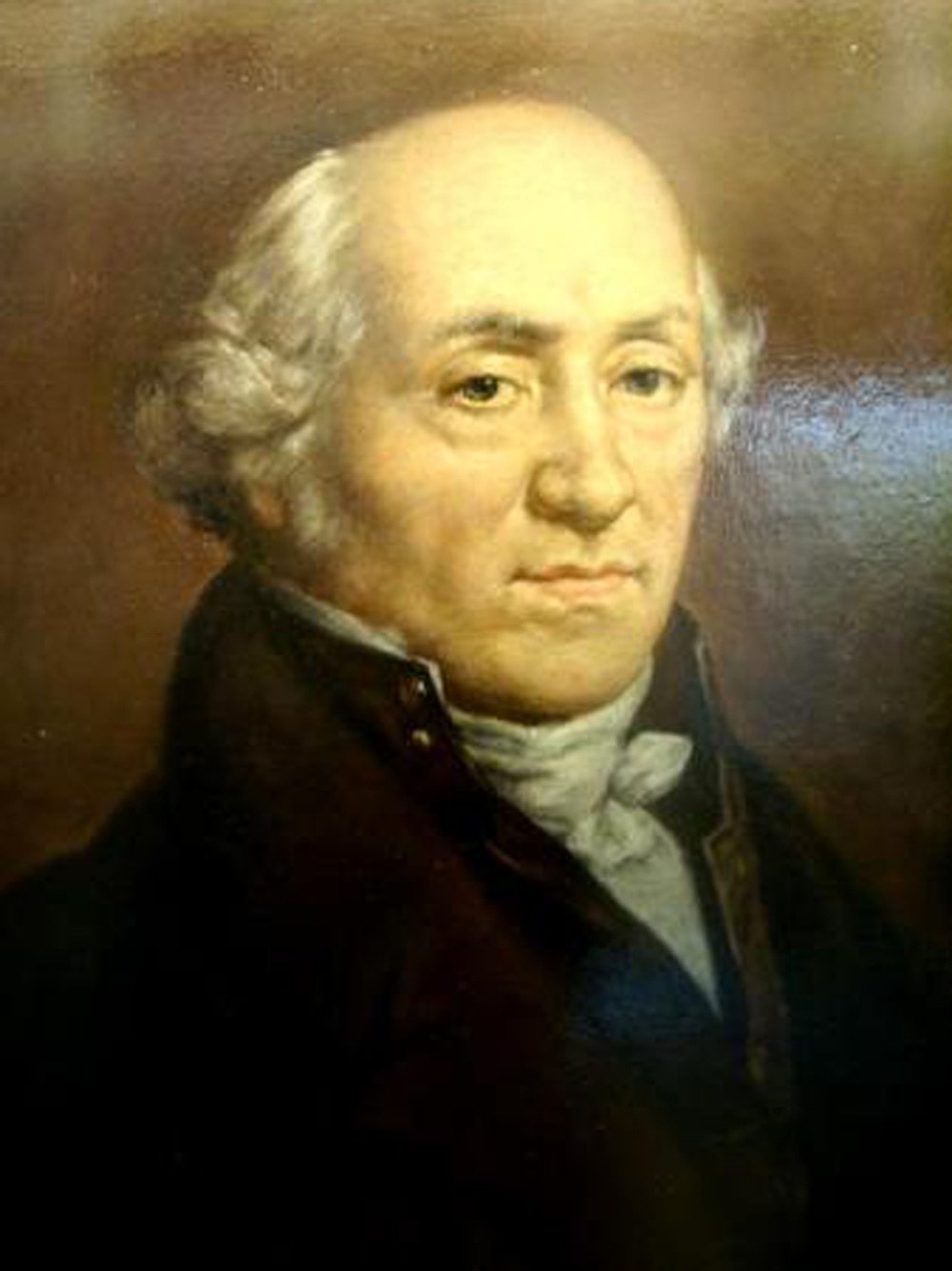
Abraham-Louis Breguet, around 1810. Painter unknown. Portrait: unknown painter · Public domain · Wikimedia Commons
_painted_portrait.jpg)
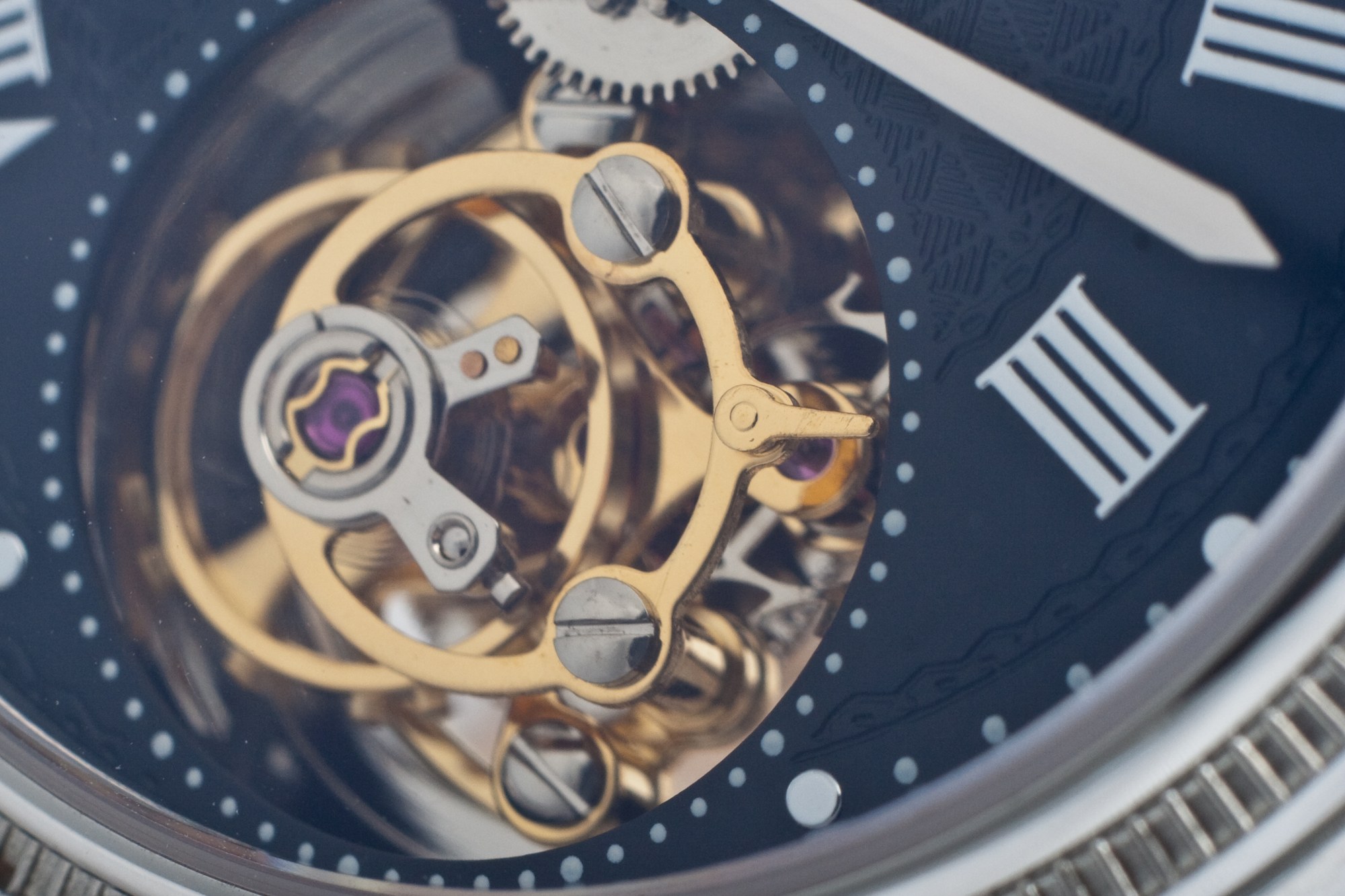
A modern wristwatch tourbillon. The whole cage, with the balance and escapement inside, turns once a minute. Photo: Guy Sie · CC BY-SA 2.0 · Wikimedia Commons
.jpg)
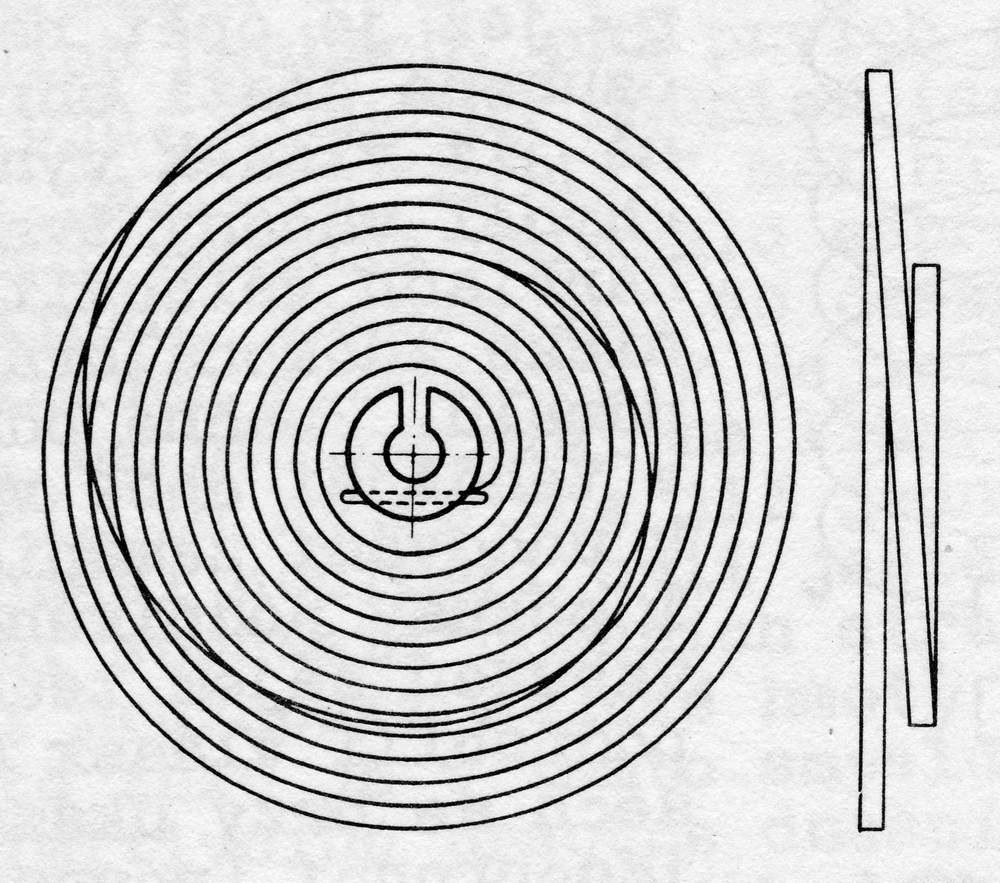
The raised outer coil, or overcoil, another Breguet idea for making the balance behave the same in every position. Drawing: Karel K. · Public domain · Wikimedia Commons

Sources
- Breguet (brand heritage page): Patent granted for a completely new type of regulator called the "Tourbillon"
- Breguet, Quai de l'Horloge magazine: On the birth of the tourbillon
- British Museum: Chronometer watch; tourbillon watch, Arnold No. 11 converted by Breguet (1958,1201.1848)
- Wikipedia: Tourbillon and Abraham-Louis Breguet
- Fondation Haute Horlogerie: Tourbillon (glossary)
- Claudius Saunier, Treatise on Modern Horology in Theory and Practice, archive.org