Algorithme du Temps lets the seconds wander, and arrive on time
Rêveries des Secondes, Étude Nº1 is a 40-piece first watch from a new brand: a mechanical centre seconds hand that slows, reverses and races, yet crosses twelve at every minute. The price is not yet confirmed.
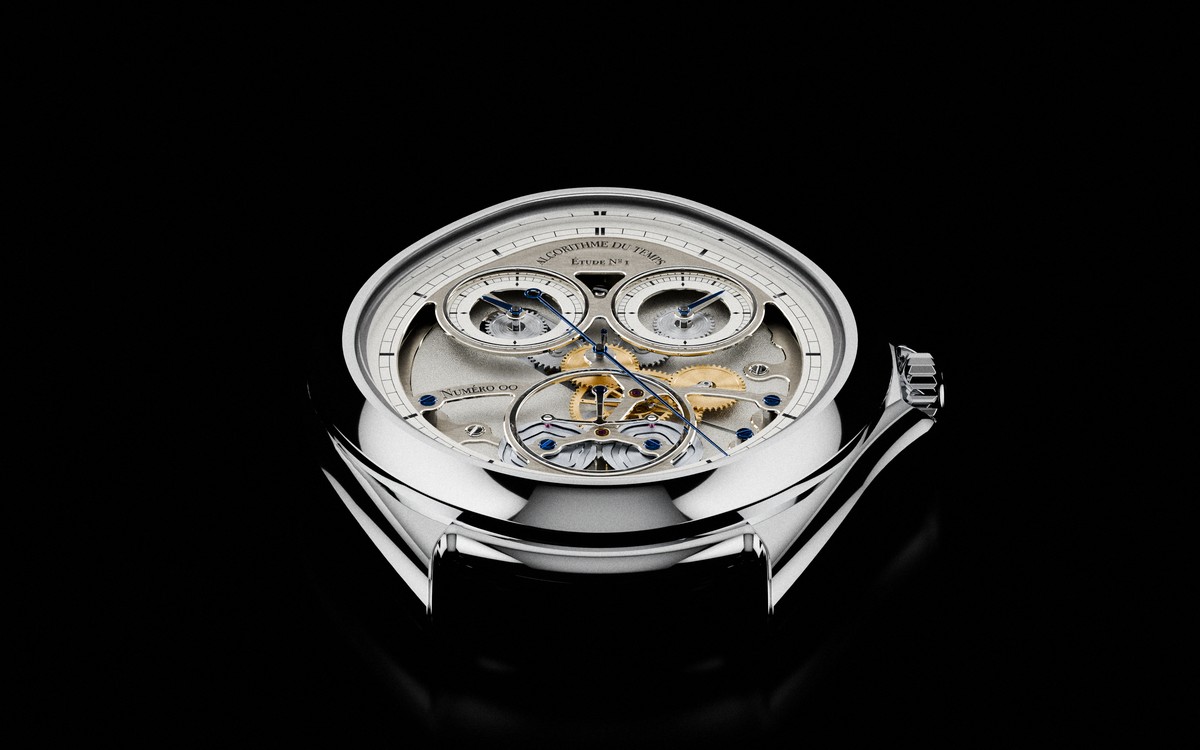
Algorithme du Temps, a new brand founded by Nadim Elgarhy, has presented its first watch. Rêveries des Secondes, Étude Nº1, released on 18 November 2026, is a numbered series of 40 pieces whose centre seconds hand never runs at an even pace. The brand says the prototype is not yet ready; the images published with the release show the design as it stands and may still change.
The hand slows, stops for an instant, runs backwards at the pace of an ordinary seconds hand, then races forward at up to three times normal speed. Its velocity changes continuously between −1× and +3×. It runs backwards 19 per cent of the time and changes direction 46 times in five minutes. At every full minute it crosses twelve exactly, after running forward for at least two seconds. The pattern then repeats, but only after five minutes — longer, the brand notes, than anyone typically watches a seconds hand. Each piece is given its own cam pair, so no two hands follow the same path.
Elgarhy, who holds a degree in computer engineering and algorithms and writes on time perception, frames the watch as a reply to the fact that felt time speeds up, drags and stretches, while a conventional seconds hand does not. "I realised that watches could measure time, but never explain it," he says. "Why should a watch only show the time we measure, and never the time we live?"
Two kinds of time on one dial
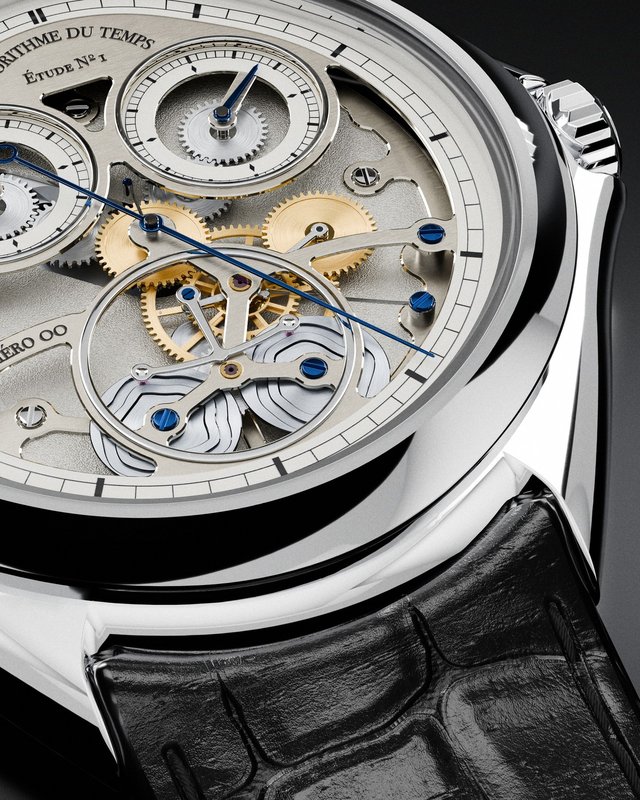
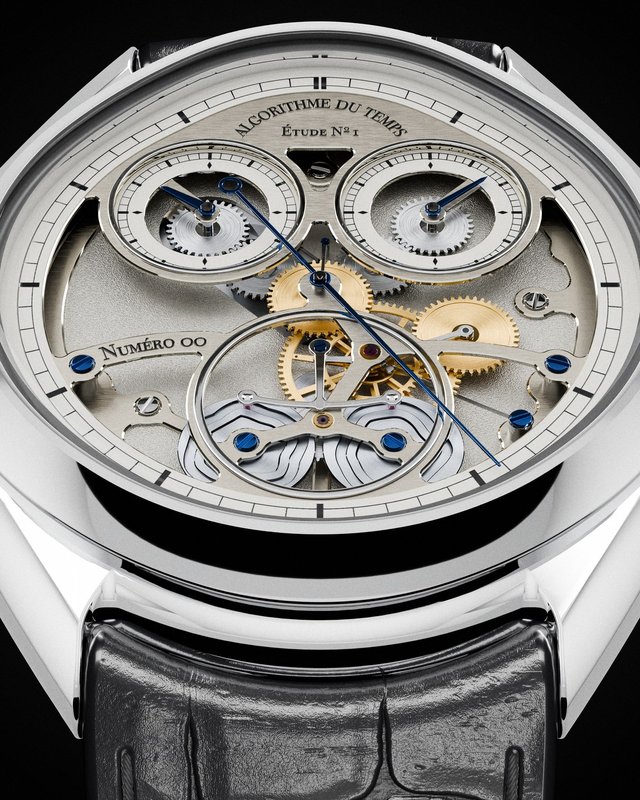
Hours and minutes sit on recessed sub-dials at 10:30 and 1:30, driven 1:1 from the base movement, and the centre is left to the seconds. The seconds hand is blued steel, 13.3 mm long; its tail ends in a hollow ring that frames the centre of each sub-dial as it passes. A 10 mm window at six o'clock shows the mechanism that sets the rhythm: an anchor resting on two cams.
Those cams, with periods of 50 seconds and 42.86 seconds, make six and seven turns in each five-minute cycle. A differential on the seconds adds their offset to the movement's own seconds, and the cam profiles are computed so that the offset is zero at every full minute. The whole assembly sits on the dial side of the base movement. The design is patent pending.
Case and movement
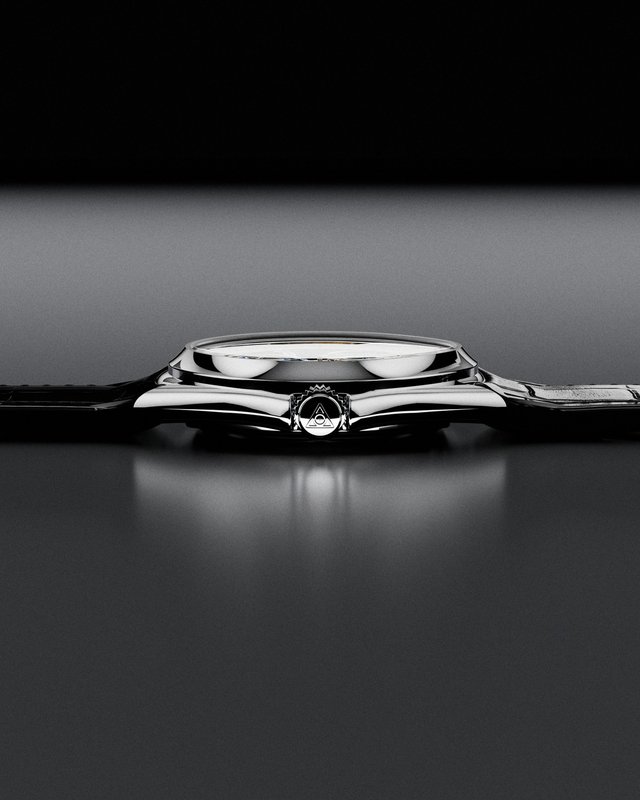
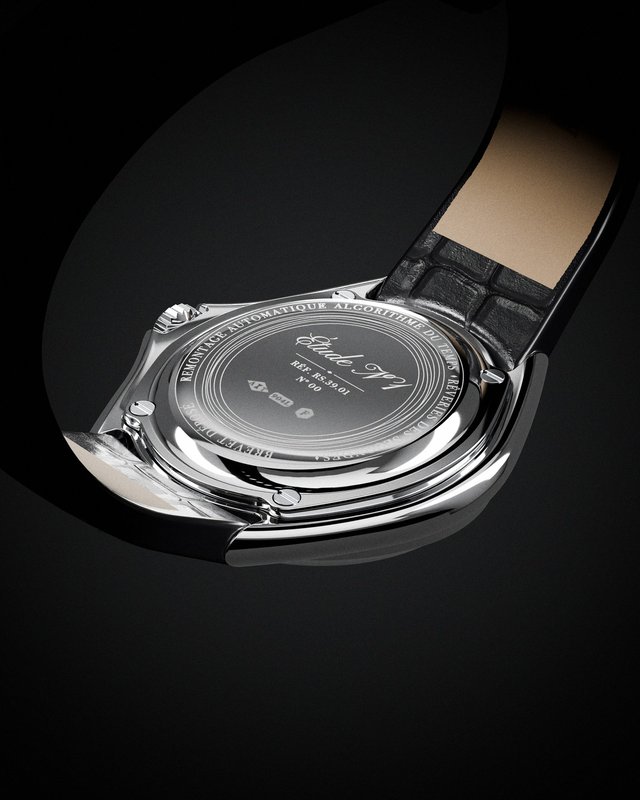
The case is 904L steel, 38.0 × 42.1 mm and 10.53 mm thick, with the crown centred on the flank and a domed sapphire crystal. The back is closed, mirror-polished and acid-etched with the name, the reference and the number of the piece. The press images show a crocodile strap, which is not listed on the formal specification sheet.
Inside is an automatic Sellita SW200-1 without a date, beating at 4 Hz (28,800 vph), with a 38-hour power reserve. The escapement and going train are left untouched.
The brand has not yet stated a price.
Gallery
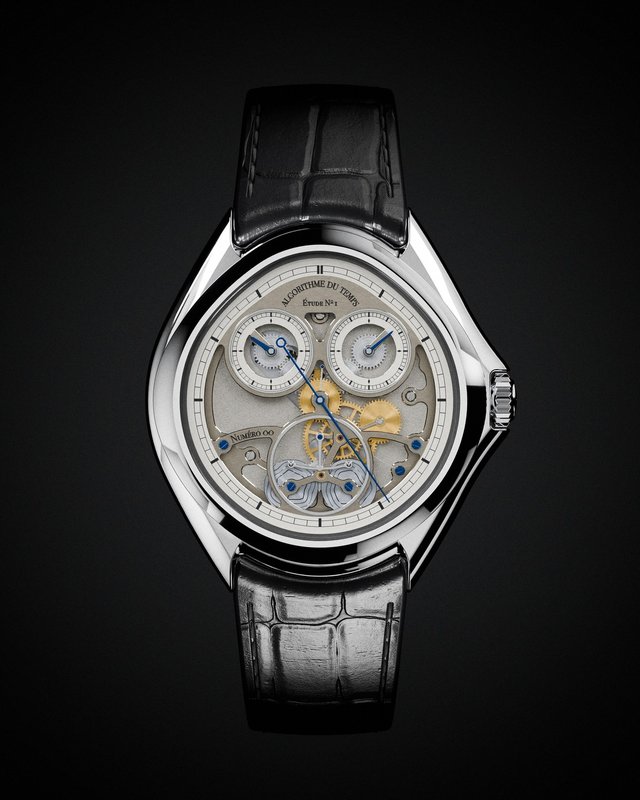
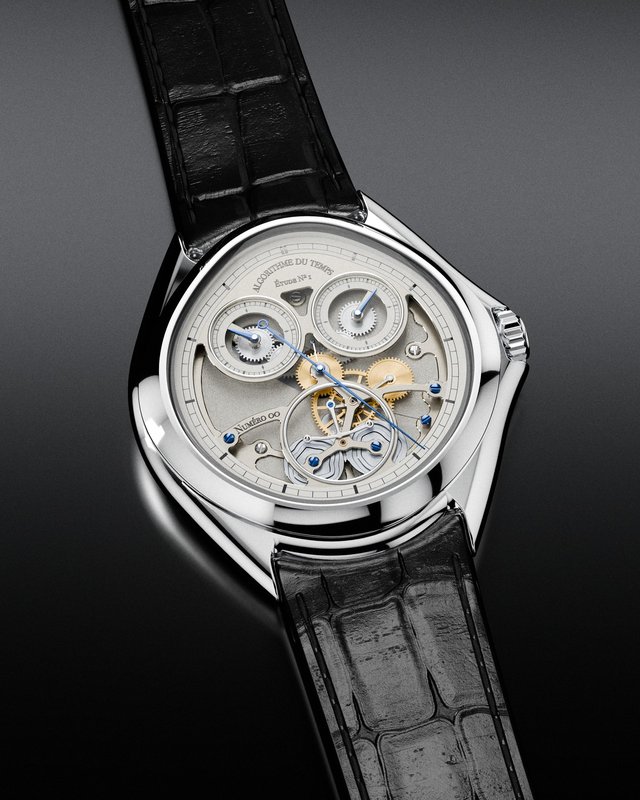
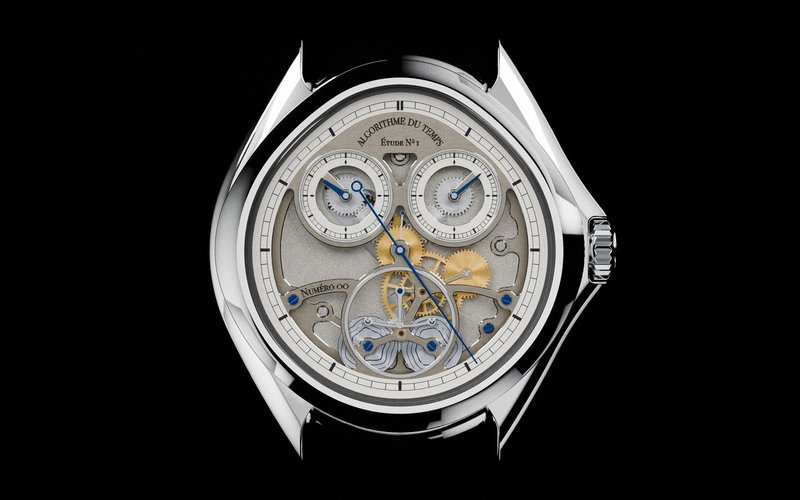
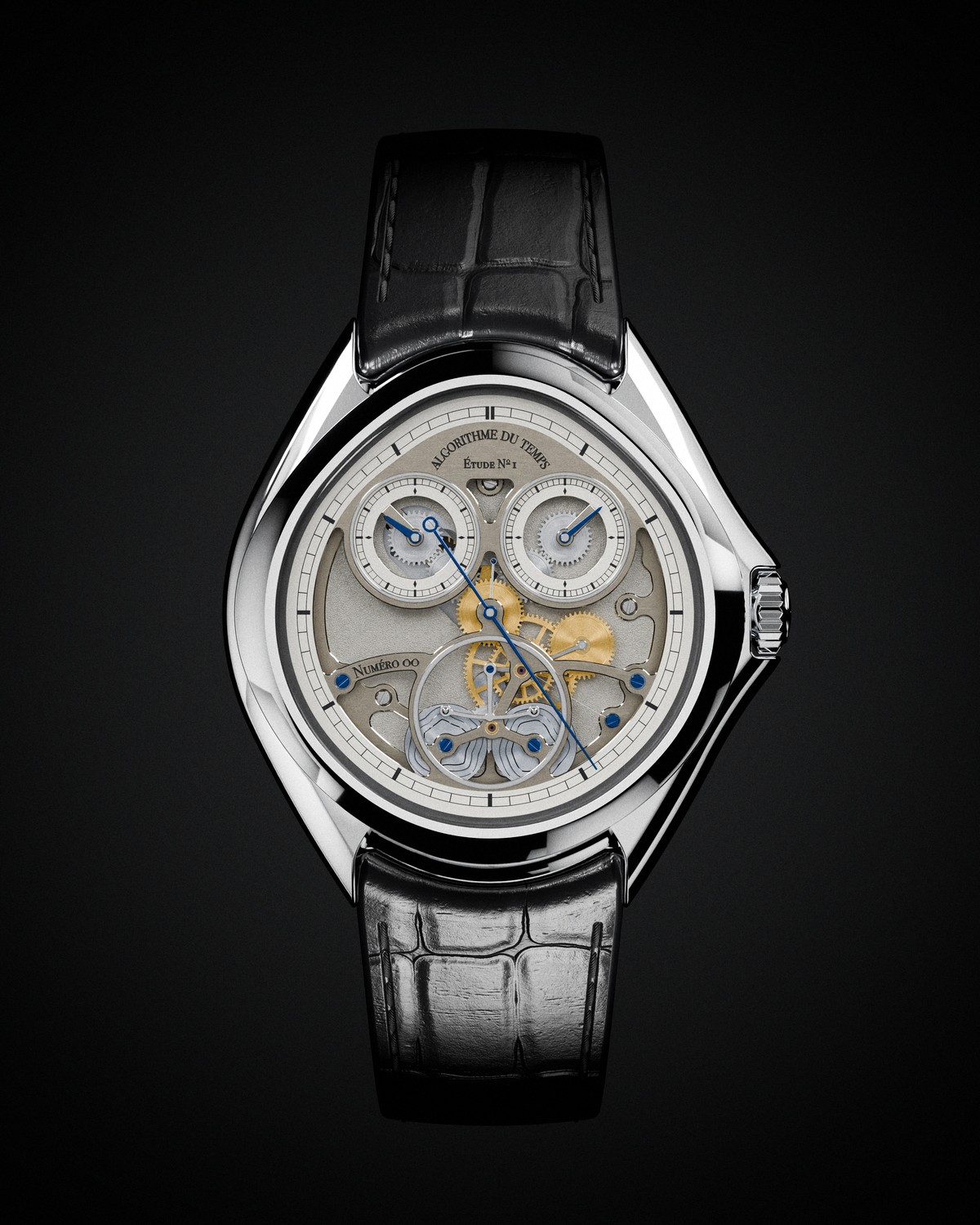
Design image: the hours at 10:30, the minutes at 1:30, and the centre left to the seconds. Photo: Algorithme du Temps · press image (design render) · Algorithme du Temps press page
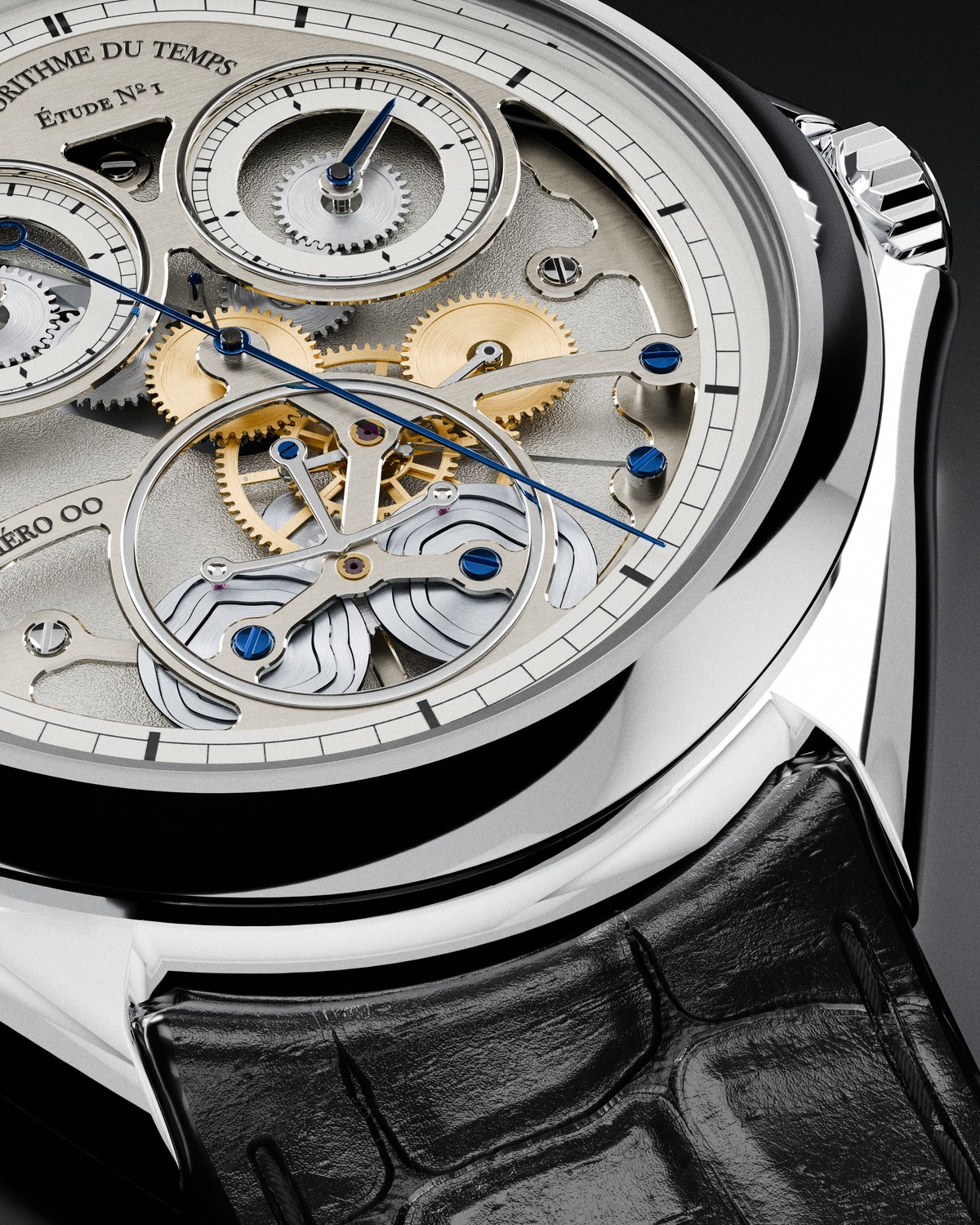
The 10 mm window at six shows the anchor and cams. Design image; this example is marked Numéro 00. Photo: Algorithme du Temps · press image (design render) · Algorithme du Temps press page
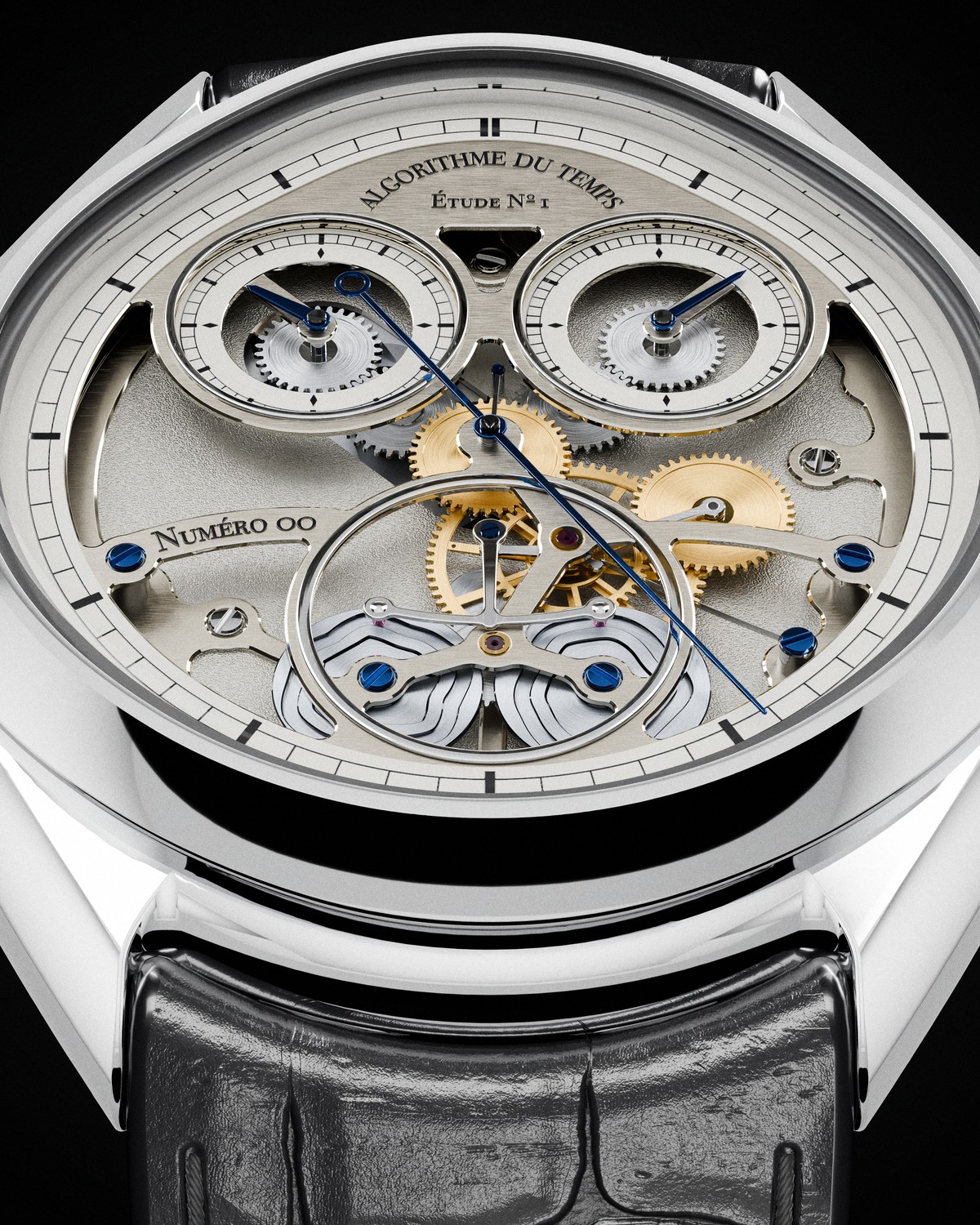
A blued-steel seconds hand, 13.3 mm long, with a hollow ring at the tail. Design image. Photo: Algorithme du Temps · press image (design render) · Algorithme du Temps press page
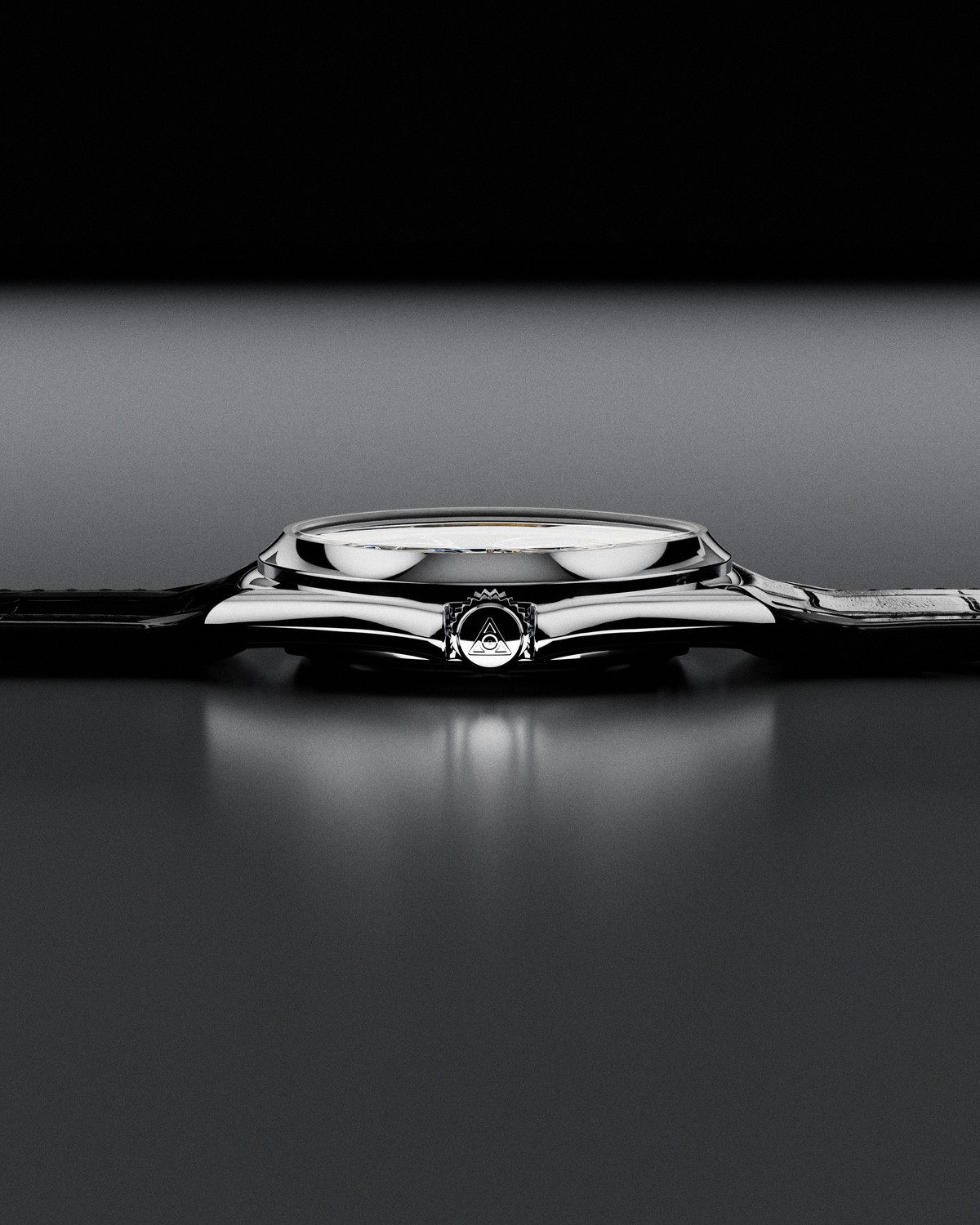
904L steel, 10.53 mm thick, under a domed sapphire. Design image. Photo: Algorithme du Temps · press image (design render) · Algorithme du Temps press page
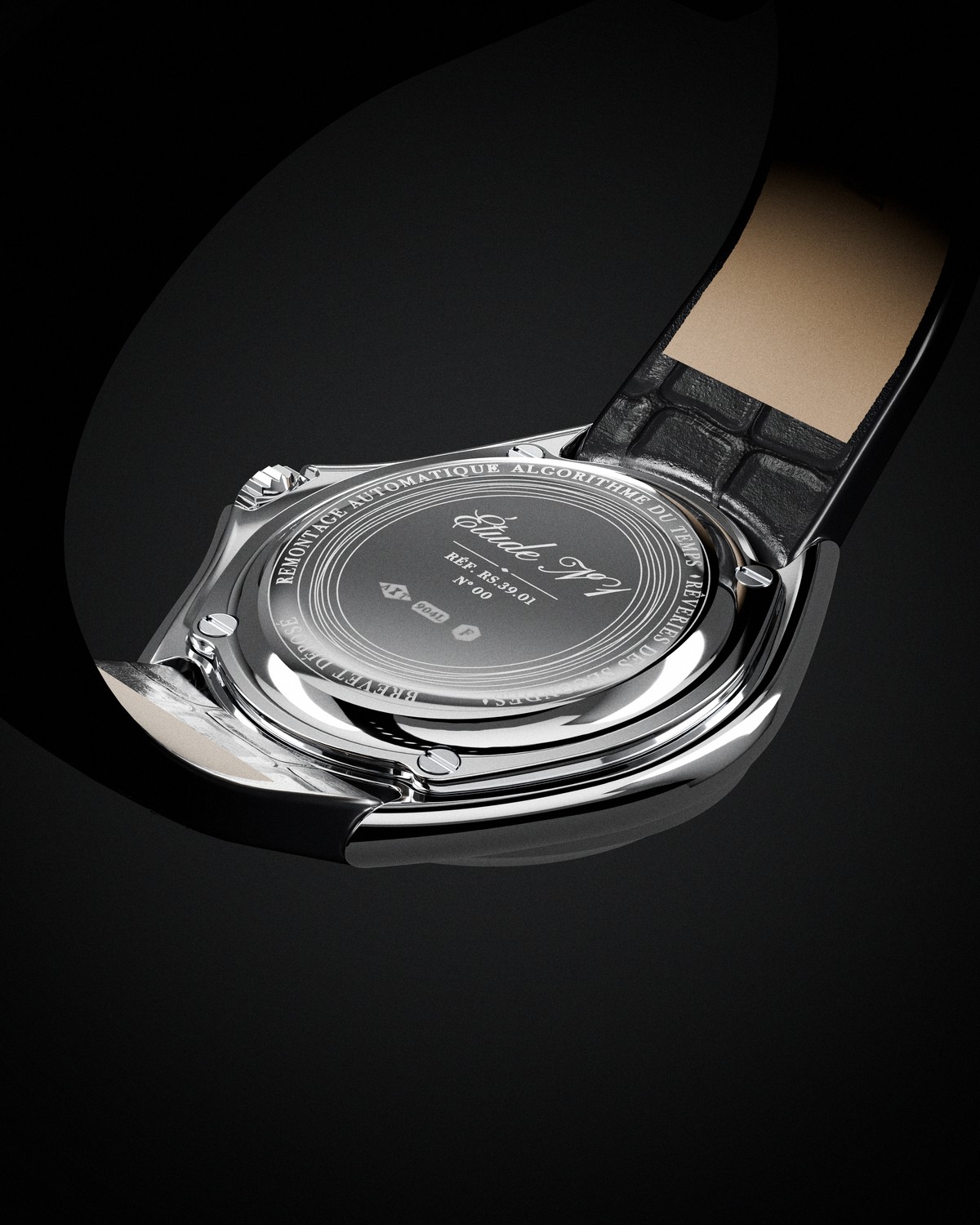
A closed, mirror-polished back, acid-etched with the name, reference and number. Design image. Photo: Algorithme du Temps · press image (design render) · Algorithme du Temps press page
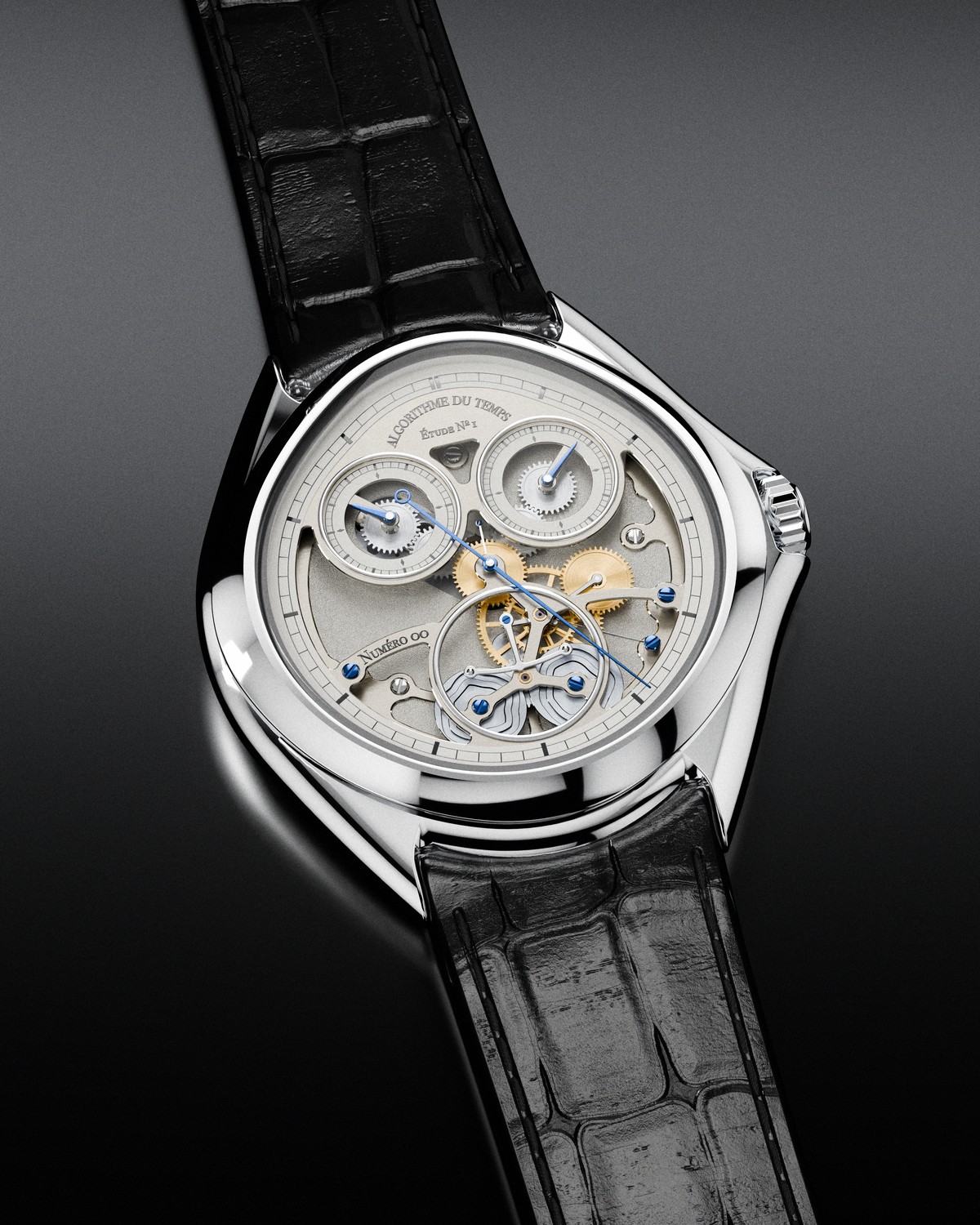
The press images show a crocodile strap. Design image. Photo: Algorithme du Temps · press image (design render) · Algorithme du Temps press page
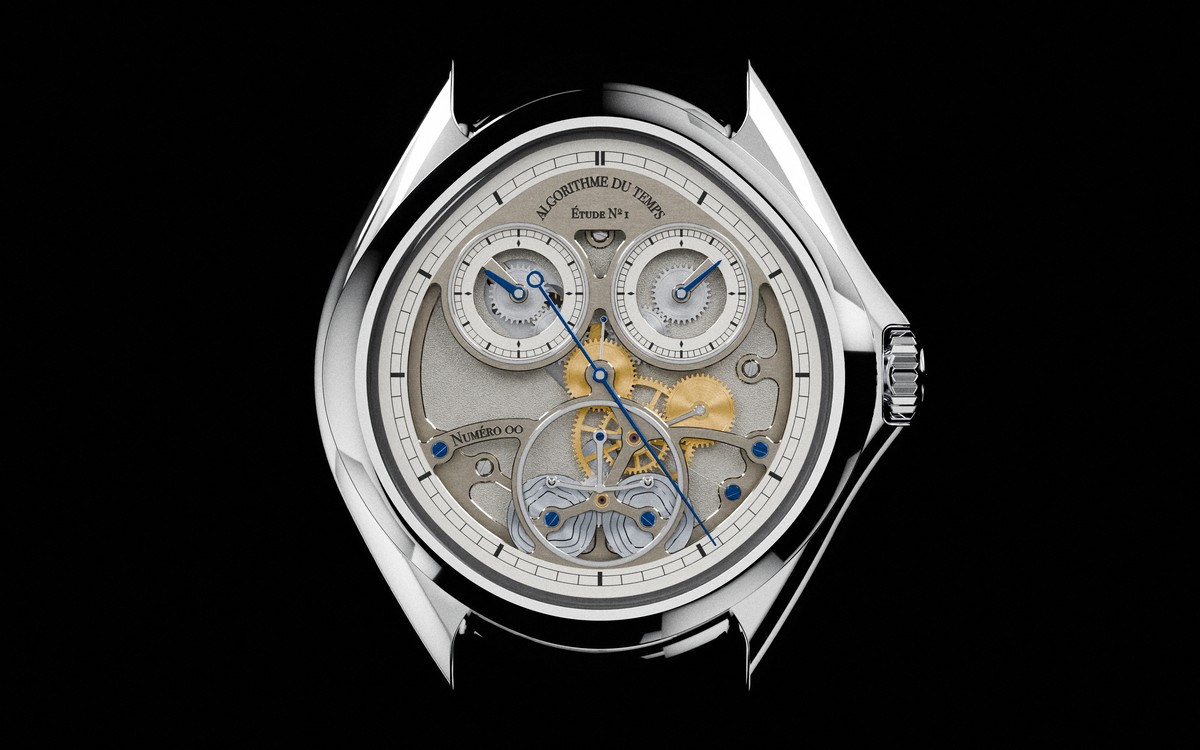
Design image from the press kit. The brand says the prototype is not yet ready. Photo: Algorithme du Temps · press image (design render) · Algorithme du Temps press page
Specifications
| Edition | |
|---|---|
| Name | Rêveries des Secondes, Étude Nº1 |
| Edition | 40 pieces, numbered; each with its own cam pair and seconds pattern |
| Price | Not yet confirmed |
| Case | |
| Material | 904L steel |
| Dimensions | 38.0 × 42.1 mm, 10.53 mm thick |
| Crystal | Domed sapphire |
| Crown | Centred on the flank |
| Case back | Closed, mirror-polished, acid-etched with the name, the reference and the number of the piece |
| Strap | Crocodile strap, as shown in the press images (not listed on the specification sheet) |
| Dial | |
| Seconds | Centre seconds of varying speed; blued-steel hand, 13.3 mm, with a hollow ring at the tail that frames the sub-dial centres |
| Hours | Recessed sub-dial at 10:30 |
| Minutes | Recessed sub-dial at 1:30 |
| Aperture | Round, 10 mm, at 6 o'clock, showing the anchor and its two cams |
| Date | None |
| Seconds function | |
| Speed | Continuously from −1× (backwards at normal speed) to +3× |
| Running backwards | 19% of the time |
| Changes of direction | 46 in five minutes |
| At twelve | Exactly at every full minute, after running forward for at least two seconds |
| Pattern | Repeats every five minutes; unique to each piece |
| Movement | |
| Base calibre | Sellita SW200-1, automatic, no date |
| Frequency | 28,800 vph (4 Hz) |
| Power reserve | 38 hours (base calibre) |
| Escapement and going train | Untouched |
| Seconds mechanism | Patent-pending differential on the seconds: the hand shows the movement's seconds plus an offset set by two cams (periods 50 s and 42.86 s; 6 and 7 turns in each five-minute cycle), steered by an anchor on the dial side |
Specifications per brand: Algorithme du Temps specification sheet, Rêveries des Secondes Étude Nº1.
Sources
- Algorithme du Temps: press page, press release (PDF), press kit (PDF) and specification sheet